Mood swings are an area where my role as a peer advocate diverge from my roles as a prescriber and educator. There was a period when bipolar diagnosis was expansive, and the 2013 update of the DSM5 represented a reaction to this. Key to this shift was an apparent epidemic of pediatric Bipolar and the prescription of antipsychotics as mood stabilizers.
In my view as a clinician, people with Bipolar have it before they turn 18. But the symptoms of Bipolar are hard to distinguish from adolescent identity exploration, along with ADHD (which might actually be some form of Anxiety!) A lot of it came down to the loophole of irritability as a manifestation of mania, which led to a lot of children being diagnosed with bipolar who were then treated with antipsychotics.
Philosophically, there is an issue with treating puberty with antipsychotics, and medically it’s of concern due to the metabolic side effects of antipsychotics, and pharma as a driver of treatment and nosology. I say pharma not just to mean “Big Pharma” the corporate side of things, but also the caregiver drive for there to be a discrete answer to a straightforward diagnosis.
Something menopause and premenstrual exacerbations teach us is that mental health is complex and multifaceted. For a long time, when I mentioned my bipolar diagnosis, it would have the asterisk of postpartum which folks would dismiss. It was only when my second youngest manifested symptoms that I went back to taking bipolar seriously as a diagnosis of my own. I had crises of anxious distress (a specifier of bipolar) when I was 46, 47, and 49, but I was still fighting anemia when these happened. It was only after my hysterectomy when anemia was out of the picture, that the pattern became clearer.
Overall, in the same periods of time that psychiatry was overdiagnosing bipolar, I was dismissing mine, and then my times of identifying bipolar as a foundational issue overlapped with psychiatry approaching bipolar diagnoses critically.
Irritability vs. Restlessness
Epidemiology already demonstrates that bipolar disorder emerges in midlife. Mood swings can encompass a number of different things. Mostly we think of depression, but there’s also mania, anxious distress, and anger.
I have spent the later majority of my life being really dedicated to sleeping well and getting enough sleep and things like that, which I would later read has been systematized into a treatment called Interpersonal Social Rhythm Therapy, or IPSRT.
Shifting over to PME for a minute, we have been using SSRIs for the luteal phase, meaning the whole two weeks between ovulation and menstruation. One of its effects does seem to be releasing allopregnanolone, if you start with the building blocks. But there are actually two separate processes happening between ovulation and premenstruation.
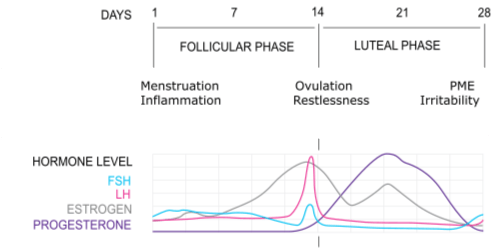
Fig. 4 The menstrual cycle* and symptom timing
SSRIs for PMDD are usually given for the entire luteal phase, because restlessness can start at day 14 (ovulation). Restlessness is responsive to antipsychotics. But irritability is distinct with the dropping of estrogen, progesterone, and subsequently allopregnanolone in the final days before menstruation Irritability is more responsive to anticonvulsant mood stabilizers.
Confusingly, both anticonvulsants and antipsychotics are called mood stabilizers in psychiatry. I consider the only true mood stabilizer to be lithium, but it is considered teratogenic and so not really suitable for people who aren’t in confirmed menopause or really reliable birth control (and some medications confound hormonal birth control). We look forward to menopause as a season of life when the cycle stops. But if you’re neurodivergent, it may stop in the pits rather than on the level.
And so then people who go through menopause are especially going to be struggling. If they are irritable, then they tend to feel guilt easily. Because they feel like they shouldn’t be irritable. You’ve gone your whole life being able to be relatively less irritable. And so that can be a big part of your role when we get there. If you’ve grown up with allopregnanolone, you’re used to being more patient or possibly even nurturing. One of the findings about allopregnanolone is that a lot of antidepressants release it. So in addition to whether you actually are being irritated or annoyed is feeling bad about being someone is getting irritated or annoyed. To the extent irritability is more characteristic of days 23-28 of the menstrual cycle, it would be more associated with the anticonvulsant properties of allopregnanolone. Anticonvulsants seem to work by stabilizing nerve conduction such as ion transfer.
Restlessness
Restlessness is one symptom that is common between the GAD 7 and PHQ9 tools we discussed in the chapters on Anxiety and Low Mood. I usually elaborate for patients that it is the tendency to pace or fidget. In my 30’s when I was finally sorting out my PME, I found ovulation was a time I might develop roving sexual fantasies. Often the restlessness would result in having trouble getting back to sleep after I woke up at 3 am. In my view, this restlessness is related to the peak of LH and FSH that occurs near ovulation.
To the extent antipsychotics are mood stabilizers, the effect starts with neurotransmitters, mostly dopamine. Second generation or atypical antipsychotics affect serotonin as well (and these are sometimes used to augment antidepressants). Ironically, they can cause restlessness or involuntary movement disorders. The ones that don’t have a tendency to metabolic side effects, though there are a couple that do neither, but also aren’t very strong in their antipsychotic effect. But some people benefit from low dose antipsychotics. One study was highlighting weight gain on low dose antipsychotics and their threshold for “low dose” was 4-8 times what I would consider low dose.
Cannabinoids
It would be hard to find someone more opposed to marijuana than I have been for 5 decades. I was particularly adamant that cannabis use disorder exists, whereas a lot of people on the Internet have said marijuana (vs. Dab) is not addictive.
But I went through my psych training in the 2020s, when even Utah has medical cannabis, with one of the indications being Autism (but only in people over 21, I haven’t had a case of someone who has done the necessary med trials to have it approved for a younger person). So I dug pretty deep into how cannabis, particularly high CBD/low THC strains, have shown potential benefit for social communication symptoms in Autism. Because CBD is the anti-convulsant component, it seemed like FDA approved anticonvulsant medications could be beneficial. Then there’s CBD legal under the Farm Bill, containing <0,3% THC. The studies and descriptions for it are not as readily available as those that exist for FDA approved medications.
A caution I retain with cannabinoids is their CYP (liver enzyme) interactions with other medications. When people say we could be replacing pharmaceuticals with cannabinoids, the dangers of polypharmacy are not necessarily better. With respect to PME, it is critical to know that cannabinoids are contraindicated in people who may become pregnant specifically because of their immunological effects, and placental abruption has been linked to cannabis use in pregnancy.
*Image cropped and elaborated on: https://commons.wikimedia.org/wiki/File:MenstrualCycle2_en.svg by Isometrik


